



Test and procedure to determine whether you have H.Pylori infection include:
1.BLOOD TEST
2.STOOL TEST
3.ENDOSCOPIC EXAMINATION
During an endoscopy exam, your doctor threads a long flexible tube equipped with a tiny camera (endoscope) down your throat and esophagus and into your stomach and duodenum. Using this instrument, your doctor can view any irregularities in your upper digestive tract and remove tissue samples (biopsy). These samples are analyzed for H. pylori infection.
4.BREATH TEST
During a breath test, you drink a solution that contains radioactive carbon molecules. If you have an H. pylori infection, the radioactive carbon is released when the solution is broken down in your stomach. Your body absorbs the radioactive carbon and expels it when you exhale. You exhale into a bag and your doctor uses a special device to detect the radioactive carbon.
|
|
|
|
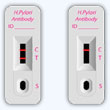
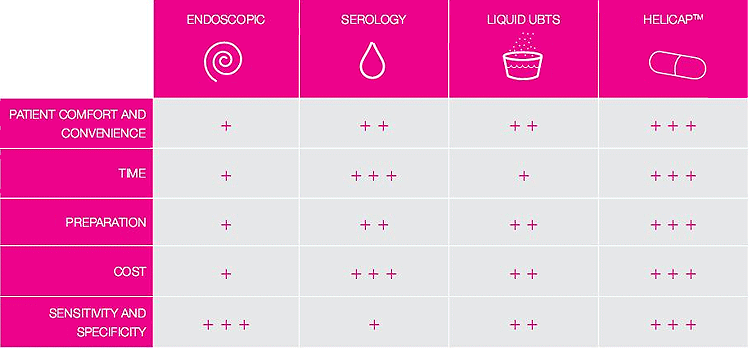
Shown below is a comparison between the different methods to detect H.Pylori infection:
When the sensitivity and specificity and diagnostic performance characteristics of all tests were compared via the ROC curve analysis, the area under the ROC curve (95% CI) was 0.977 (0.956– 0.997) for UBT, 0.947 (0.902–0.996) for RUT, and 0.849 (0.752–0.947) for histopathology.Shown below is the ROC curve:
