Background & History
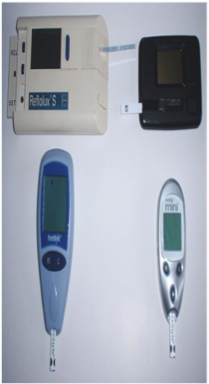
In 1962, Clark and Lyons created the first glucose enzyme electrode A glucose enzyme electrode measured the oxygen consumed by glucose oxidase. In the 1970’s, home glucose monitoring was show to improve glycemic control and in the 1980’s the first home glucometers were marketed. Today, the market is large and many companies have competed to produce smaller, more accurate and less expensive glucometers.
In 1992, Barry Lewis performed a laboratory evaluation of the Glucocard, which was a glucometer that used electrochemistry to measure glucose levels. The device had the advantages of being small and easy to operate/maintain. More importantly, only a small sample size was required, the device was fully automated and it had a wide linear range. However, variability in the readings still occurred which was primarily due to the user. In 1998, Gernot Brunner compared home glucose meters to clinical approaches. According to his studies, home glucose meters varied substantially and few obtained glycemic readings within clinically acceptable zones. In a more recent study, Martin Kroll compared point-of-care glucose meters to central laboratory analyzers. The reliability of more recent POCT glucose meters depends on the disease, patient drugs, instrument performance and user proficiency. Results from these devices are generally reliable but should always be confirmed with a laboratory analyzer when possible.