Opthalmic Drug Delivery and Microbubbles

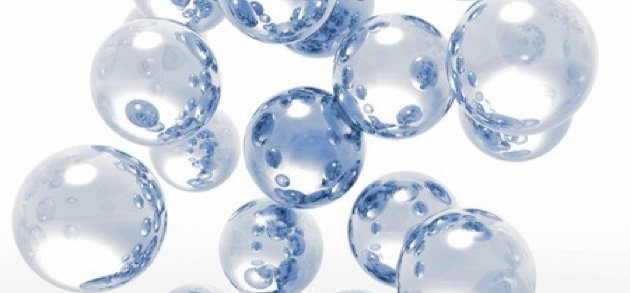
What if doctors were able to send medicine only to the tissues that need it, targeting problems where they arise? What if these doctors were able to by-pass the bodies most protective barriers non-invasively? This is the excitement behind ultrasound triggered microbubbles as drug carriers. Microbubbles are small colloid particles with a 1-8 micrometer (μm) diameter. The bubbles are filled with an inert gas and surrounded by a thin shell of protein, surfactant or polymer. Microbubbles have been used extensively in ultrasound (US) since 1990s as a contrast agent. But recently, microbubbles have been proposed as a tool for targeted therapeutics. The idea is to load drugs into or on the small bubbles and then inject these bubbles into the body. The bubbles would have tags or markers that cause them to concentrate around a specific tissue type. Once the bubbles have reached the area of interest, US is used to destroy the bubbles and release their drug payload. Cavitation caused by the acoustic US waves also causes local cells to increase their uptake of these drugs. This process is called ultrasound targeted microbubble destruction (UTMD). US is already used very extensively in modern medicine as an inexpensive diagnostic and imaging tool. The broad use of US in medicine makes UTMD even more attractive because it could be easily incorporated into existing infrastructure. [1]
This concept is uniquely attractive to physicians hoping to treat ocular disorders. The physiological and biochemical barriers protecting the eye are also a challenging obstacle for treating eye disorders. Effective topical drug deliver is circumvented by the eyes tears, drainage system and impermeable cornea. [2] Those drugs that are able to penetrate the sclera are transported away via blood circulation before they can diffuse into the eye’s inner structures. The eye also evades systematically administered drugs by its blood-aqueous barrier and blood-retina barrier (see Anatomy section). [3] The ability to release the necessary drugs inside the inner structures of the eye would by-pass all of these barriers for more effective clinical treatment of ocular disorders.
This website is meant to give interested scientists and engineers a broad overview of UTMD and it’s potential application to opthalmic drug delivery. Please use the links at the top of each page to navigate this site. And thank you for visiting!
Introduction
Created by Meghan Cozzens for BME 240. Last updated on 6/4/2010.
Ophthalmic drug delivery is one of the most attractive and challenging endeavors faced by the pharmaceutical scientists.
-Current Pharmaceutical Design, 2009